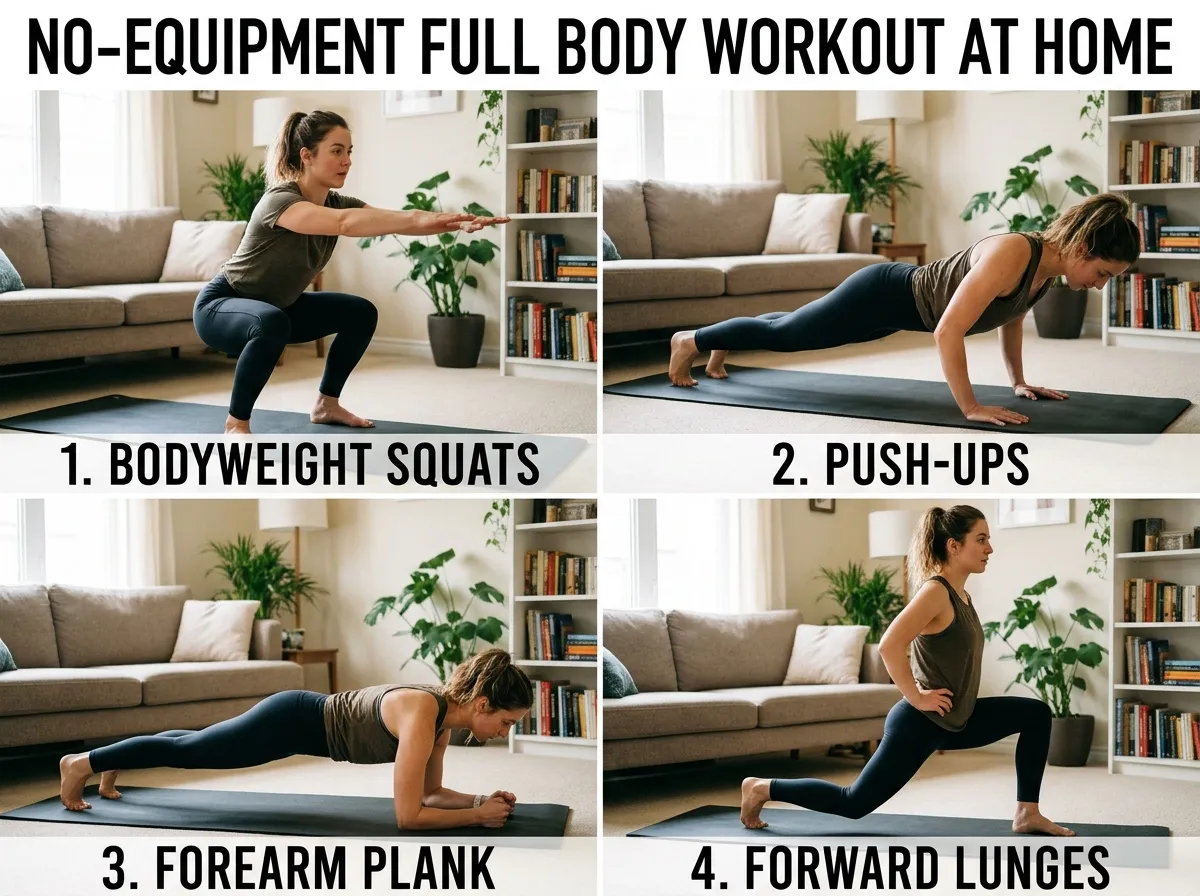
No-Equipment Full Body Workout At Home
Finding a reliable no-equipment full body workout at home can transform your fitness routine without requiring a gym membership or bulky gear. By leveraging your own weight and gravity, you can build lean muscle, increase cardiovascular endurance, and improve overall functional strength. This approach is highly efficient for those with busy schedules who need to maximize their time in small spaces.
Mastering these fundamental movements provides a solid foundation for long-term health and athletic performance. Whether you are a total beginner or an experienced athlete looking for a convenient alternative, these movements deliver results through consistent practice and intensity.
- 10 bodyweight squats, focusing on depth and form
- 10 standard push-ups, keeping the core engaged
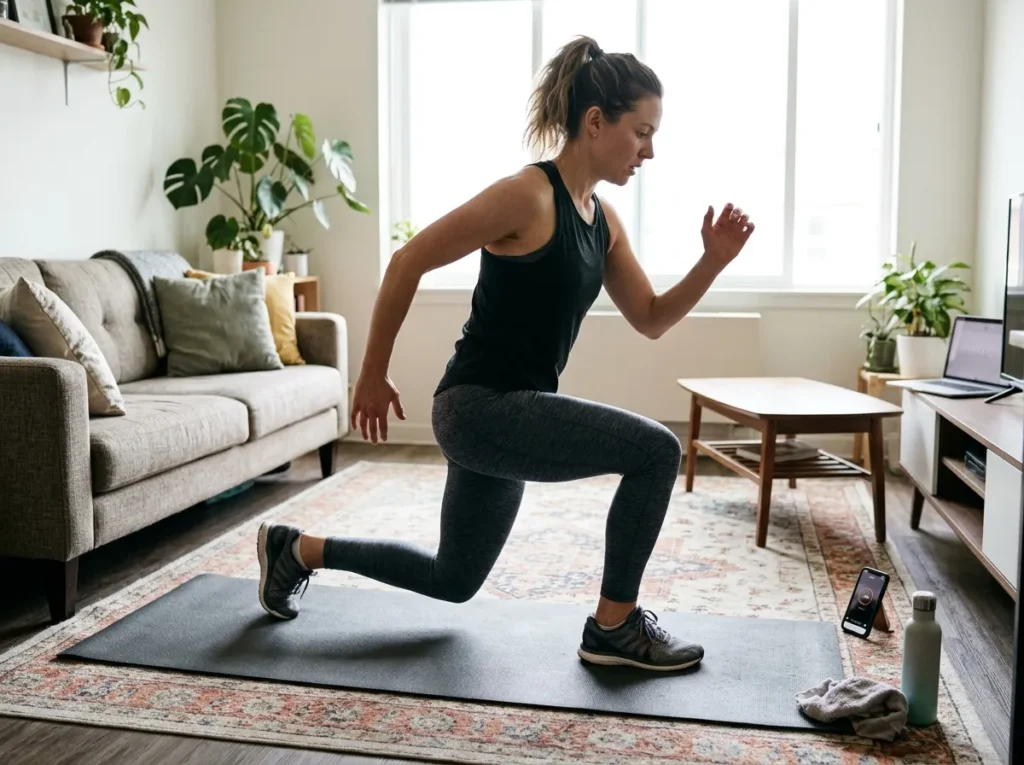
- 10 alternating forward lunges, five per leg
- 30 seconds in a rigid plank position on the floor
- 15 glute bridges, squeezing at the top
- 10 mountain climbers, driving knees toward the chest
- 20 bicycle crunches, rotating the torso side to side
- 10 burpees, including a jump at the end of each rep
Instructions
- Begin with a five-minute dynamic warm-up, such as marching in place or arm circles, to prepare your joints for the movement.
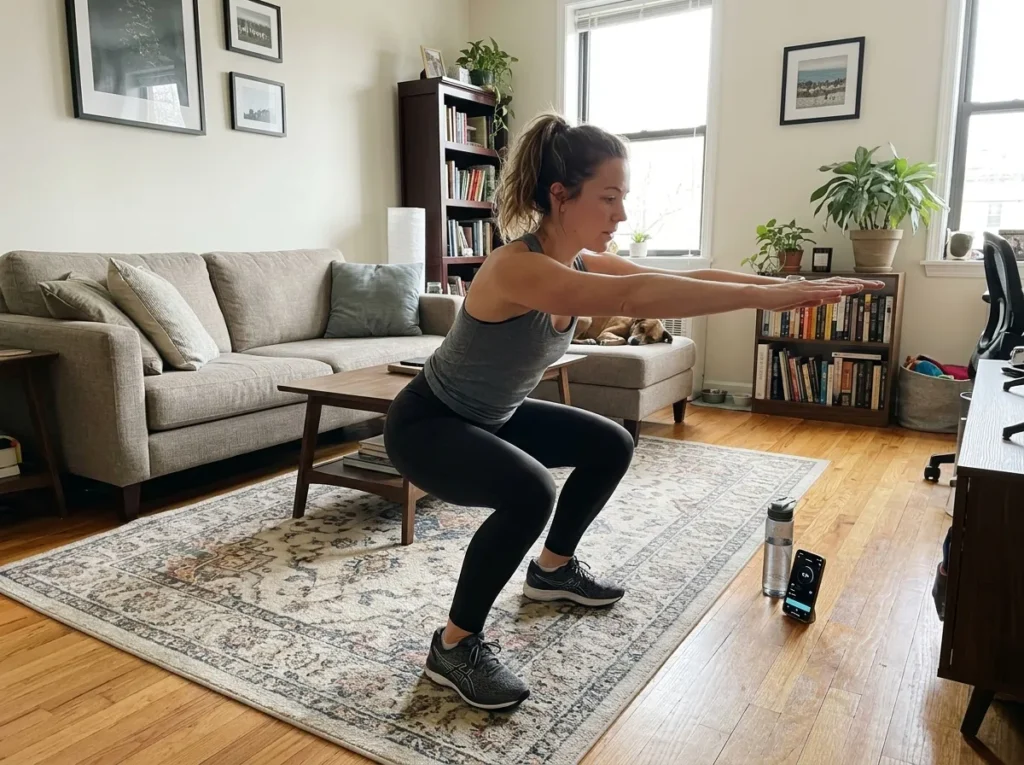
- Perform the squats by lowering your hips back and down, ensuring your knees stay aligned with your toes, then stand back up.
- Move immediately into the push-ups, maintaining a straight line from your head to your heels while lowering your chest toward the floor.
- Execute the lunges by stepping one foot forward and lowering your hips until both knees form a 90-degree angle, then push back to the start.
- Hold the plank position on your forearms, keeping your back flat and your glutes tight to prevent your hips from sagging.
- Transition to glute bridges by lying on your back with knees bent, lifting your hips toward the ceiling until your body forms a straight line.
- Perform mountain climbers from a push-up stance, rapidly alternating your knees toward your chest while keeping your back as stable as possible.
- Finish the circuit with bicycle crunches, touching your opposite elbow to your knee while extending the other leg fully.
- Rest for 60 seconds after completing the entire circuit to allow your heart rate to normalize.
- Repeat the full circuit four times to reach the desired training intensity, about 30 minutes total.
The Science of Bodyweight Training
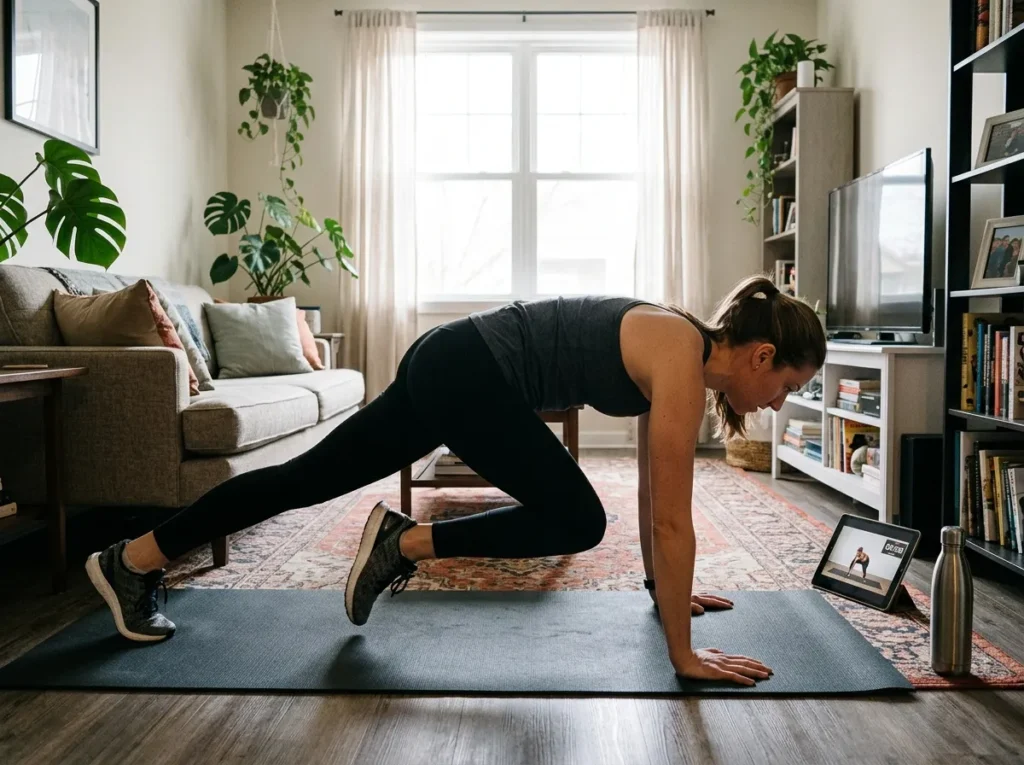
Effective bodyweight training relies on the principle of progressive overload, which involves gradually increasing the difficulty of your movements. When you perform a no-equipment full body workout at home, you manipulate leverage and tempo to challenge your muscles. For instance, slowing down the lowering phase of a squat increases time under tension, which stimulates muscle growth without needing external weights.
Research from the American College of Sports Medicine highlights how high-intensity interval training using bodyweight can yield significant metabolic benefits in short durations. By keeping rest periods minimal, you keep your heart rate elevated, which turns a standard strength session into a cardiovascular challenge. This dual-purpose approach is perfect for burning calories efficiently within your living room.
Mastering Squats for Lower Body Power
The squat is arguably the king of all movements for building strength in the legs and core. To perform it correctly, start with your feet shoulder-width apart and toes pointed slightly outward. As you lower, imagine sitting back into an invisible chair, keeping your chest tall and your heels firmly planted on the ground.
Many people make the mistake of letting their knees cave inward during the descent. Focus on driving your knees outward to engage the glutes and protect the joint. If you find standard squats too easy, try explosive jump squats to add a plyometric element that builds power.
Upper Body Strength with Push-ups
Push-ups are a versatile exercise that targets the chest, shoulders, and triceps while requiring significant core stability. Start in a high plank position with your hands slightly wider than shoulder-width, ensuring your fingers are spread for a solid base. As you push your body away from the floor, keep your elbows tucked at a 45-degree angle rather than flared out to the sides.
If a full push-up is too difficult, drop to your knees to maintain proper form while you build initial strength. The goal is to keep your back flat throughout the entire motion, avoiding the common tendency to arch the lower back. Quality of movement is far more important than the number of repetitions completed.
Core Stability and the Plank Position
A strong core is essential for injury prevention and overall athletic performance. The plank position is the gold standard for isometric core training, forcing your abdominals and lower back to work together to keep you stable. When holding this position, imagine pulling your belly button toward your spine to engage your deep transverse abdominis.
Do not let your hips sag toward the floor, as this puts unnecessary strain on your lumbar spine. If you feel your form breaking, it is better to take a short break rather than continuing with poor technique. You can also incorporate variations like side planks to target the obliques for a more balanced midsection.
Lunges for Balance and Coordination
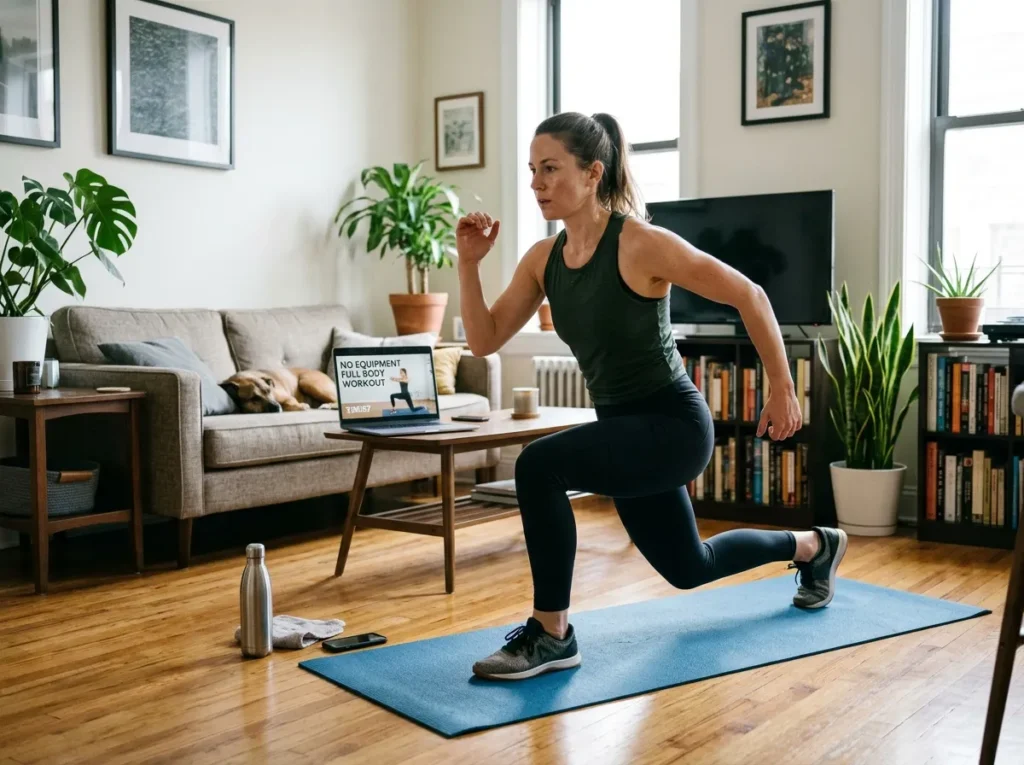
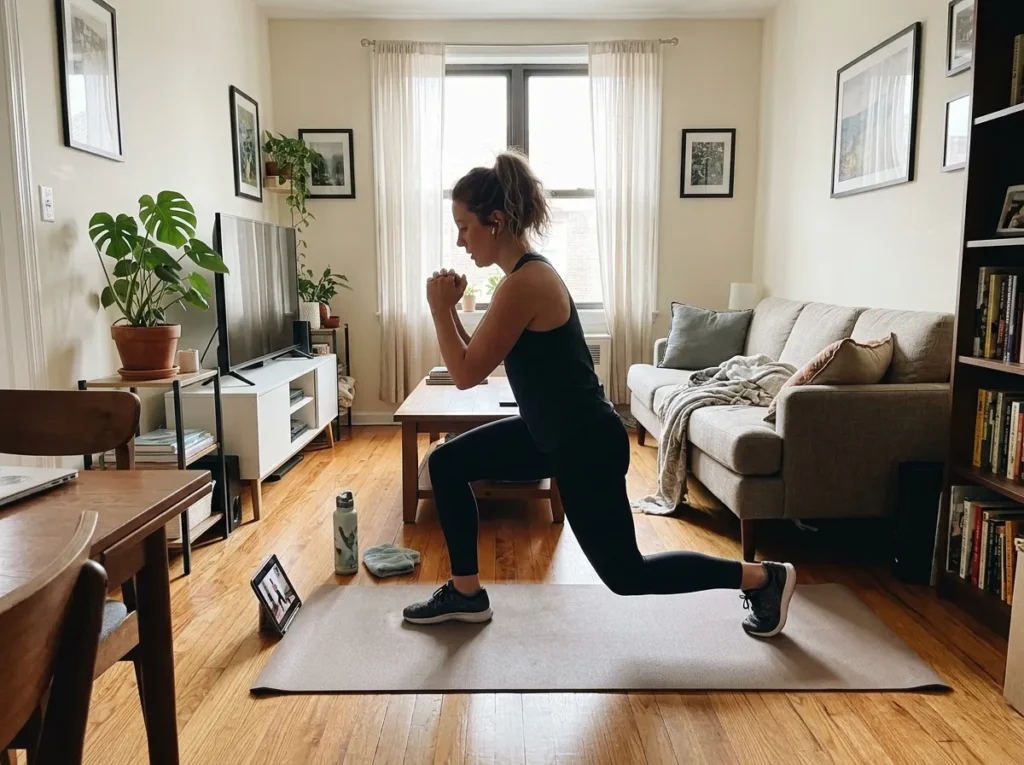
Lunges are a unilateral movement, meaning they train one side of your body at a time. This is critical for identifying and correcting muscle imbalances that often go unnoticed during bilateral exercises like squats. Step forward with your right foot and lower your hips until both legs are at right angles.
Maintain an upright posture throughout the movement, resisting the urge to lean forward over your front knee. After completing the reps on the right side, switch and perform the same number on the left. This focus on individual leg strength translates directly to improved balance and stability in daily activities.
Integrating Burpees for Cardiovascular Health
Burpees serve as the ultimate full-body conditioning tool because they combine a push-up with an explosive jump. Start from a standing position, drop into a squat, place your hands on the floor, and kick your feet back into a plank. Perform one push-up, jump your feet back to your hands, and leap into the air.
This movement forces every major muscle group to coordinate under fatigue, making it an excellent finisher for any workout. If the jump feels too taxing, simply stand up and reach toward the ceiling instead. The key is to keep moving at a steady pace to keep your heart rate high.
Structuring Your Weekly Routine
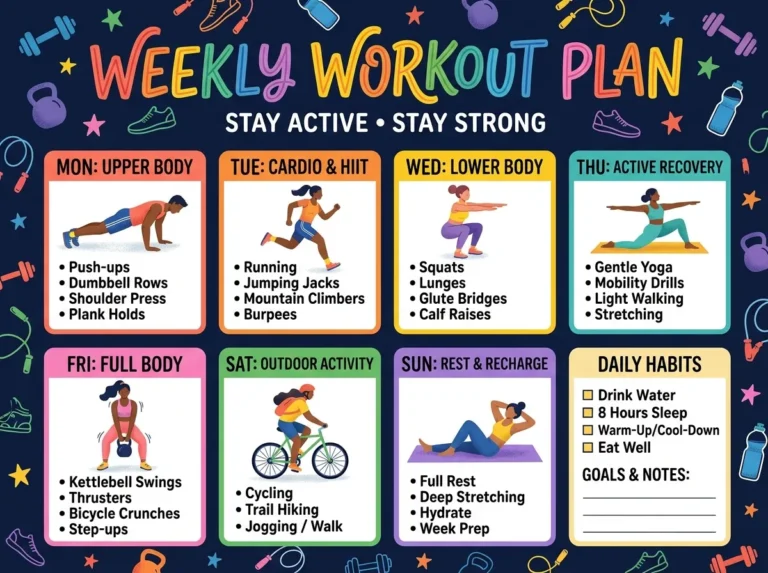
Consistency is the most important factor in seeing long-term progress with your fitness. Aim to perform your no-equipment full body workout at home at least three times per week, with rest days in between to allow for muscle recovery. You can increase the difficulty by shortening your rest periods or adding more rounds to each session.
Tracking your progress is also vital for staying motivated. Keep a simple log of how many repetitions you complete or how long you can hold a plank before needing a break. Seeing these small improvements over time provides the psychological boost needed to maintain your routine.
Common Mistakes to Avoid
One of the most frequent errors is ignoring the importance of a proper warm-up. Jumping straight into intense movements without preparing your muscles can lead to unnecessary strain or injury. Always dedicate at least five minutes to light movement to get blood flowing to your joints.
Another common pitfall is sacrificing form for speed. It is much better to perform ten high-quality repetitions than thirty sloppy ones that put pressure on your joints. Pay attention to how your body feels, and stop if you experience sharp pain that isn’t related to muscle fatigue.
FAQ
What is a good way to scale these exercises for beginners?
If you are just starting, focus on reducing the number of repetitions or increasing the rest time between sets. You can also modify movements, such as performing push-ups against a wall or using a chair for support during squats, until your strength improves.
How can I burn 500 calories in 30 minutes?
Burning 500 calories in a short timeframe requires very high intensity, such as circuit training with minimal rest. Focus on movements that involve the whole body, like burpees and mountain climbers, while keeping your heart rate in the upper training zones throughout the session.
What is the 3-3-3 rule for working out?
The 3-3-3 rule often refers to a balance of three days of cardiovascular exercise, three days of strength training, and three days of active recovery or rest. It provides a simple framework to ensure you are hitting all aspects of fitness without overtraining your body.
How can I build my body at home without equipment?
Building muscle at home is possible by using progressive overload and focusing on mechanical tension. As you get stronger, you must make the exercises harder by slowing down your tempo, increasing the volume of sets, or trying more difficult variations of standard bodyweight movements.
How often should I change my workout routine?
You should aim to change your routine every four to six weeks to prevent plateaus and keep your body challenged. This doesn’t mean changing every single exercise, but rather adjusting the intensity, volume, or order of your movements to keep your progress moving forward.
Conclusion
Embracing a no-equipment full body workout at home offers a flexible, efficient path toward achieving your fitness goals. By focusing on fundamental movements like squats, lunges, and push-ups, you build the strength and endurance necessary for a healthy lifestyle. Remember that progress comes from consistent effort and a dedication to proper form over quick results.
Start by integrating these movements into your weekly schedule and listen to your body as you increase the intensity. Whether you have fifteen minutes or an hour, your commitment to movement will yield long-term benefits for your physical and mental well-being. Take the first step today and enjoy the process of becoming stronger in your own space.
No-Equipment Full Body Workout At Home

Finding a reliable no- equipment full body workout at home can transform your fitness routine without requiring a gym membership or bulky gear. By leveraging your own weight and gravity, you can build lean muscle, increase cardiovascular endurance, and improve overall functional strength .
Ingredients
- 10 bodyweight squats, focusing on depth and form
- 10 standard push-ups , keeping the core engaged
- 10 alternating forward lunges , five per leg
- 30 seconds in a rigid plank position on the floor
- 15 glute bridges, squeezing at the top
- 10 mountain climbers, driving knees toward the chest
- 20 bicycle crunches, rotating the torso side to side
- 10 burpees, including a jump at the end of each rep
Instructions
- Begin with a five-minute dynamic warm-up, such as marching in place or arm circles, to prepare your joints for the movement.
- Perform the squats by lowering your hips back and down, ensuring your knees stay aligned with your toes, then stand back up.
- Move immediately into the push-ups, maintaining a straight line from your head to your heels while lowering your chest toward the floor.
- Execute the lunges by stepping one foot forward and lowering your hips until both knees form a 90-degree angle, then push back to the start .
- Hold the plank position on your forearms, keeping your back flat and your glutes tight to prevent your hips from sagging.
- Transition to glute bridges by lying on your back with knees bent, lifting your hips toward the ceiling until your body forms a straight line.
- Perform mountain climbers from a push-up stance, rapidly alternating your knees toward your chest while keeping your back as stable as possible.
- Finish the circuit with bicycle crunches, touching your opposite elbow to your knee while extending the other leg fully.
- Rest for 60 seconds after completing the entire circuit to allow your heart rate to normalize.
- Repeat the full circuit four times to reach the desired training intensity, about 30 minutes total.
Similar Posts
Tone And Build Muscle Gym Routine For Women
Finding a reliable tone and build muscle gym routine for women is the first step toward achieving lasting physical strength and confidence. Many people feel overwhelmed by the sheer volume of conflicting fitness advice, but the core principles remain straightforward and highly effective for most individuals. By focusing on consistent resistance training and progressive overload,…
Best Results Weight Training Plan For Females
Weight Training Finding the best Results Weight Training Plan For Females requires a shift in focus from mere calorie burning to intentional muscle development. When you prioritize structural strength and compound movements, you create a foundation that supports long-term health and metabolic efficiency. This approach moves beyond temporary fixes, providing a sustainable path toward improved…
3 Realistic Weekly Workout Plans For Women At Home
Finding realistic weekly workout plans for women at home shouldn’t feel like a chore or an impossible puzzle. When you have a clear strategy, fitting movement into your busy schedule becomes much simpler and more sustainable. These routines focus on consistency rather than intensity, helping you build strength and energy without needing a gym membership….
At-Home Dumbbell Leg Day Exercises For Women
Building lower body strength is highly effective when you incorporate at-home dumbbell leg day exercises for women into your routine. You don’t need a crowded gym or expensive machines to see progress in your glutes, hamstrings, and quads. By using a pair of dumbbells, you can create enough resistance to challenge your muscles, improve your…
Beginner Friendly Bodyweight Workout Routine for Home Fitness
Starting a beginner friendly bodyweight workout routine is one of the most accessible ways to build physical strength without needing a gym membership or expensive equipment. Whether you are looking to improve your overall health or increase your daily activity, these movements leverage your own weight to create resistance. By focusing on fundamental patterns, you…
Best Arm Exercises To Tone Flabby Arms Fast
Finding the best Arm Exercises To Tone Flabby Arms Fast often feels overwhelming when you are bombarded with conflicting fitness advice. Achieving firmer upper arms requires a combination of targeted resistance movements and consistent effort to build muscle density beneath the skin. By focusing on specific muscle groups, you can improve definition and increase overall…