Best Results Weight Training Plan For Females
Weight Training
Finding the best Results Weight Training Plan For Females requires a shift in focus from mere calorie burning to intentional muscle development. When you prioritize structural strength and compound movements, you create a foundation that supports long-term health and metabolic efficiency. This approach moves beyond temporary fixes, providing a sustainable path toward improved body composition and functional capacity.
By following a structured routine that evolves alongside your growing capabilities, you ensure consistent progress without plateaus. Whether you are aiming to increase bone density, improve posture, or change your physical appearance, this article offers the building blocks to design a program tailored to your specific needs and current fitness level.
Foundational Principles for Female Strength
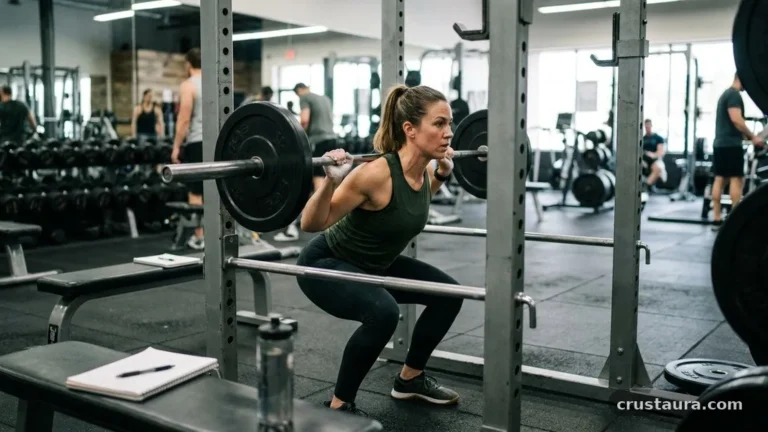
1. Prioritize compound movements that engage multiple muscle groups simultaneously, such as squats, deadlifts, and overhead presses, to maximize your time in the gym.
Spend at least ten minutes warming up your joints before attempting heavy compound lifts to ensure your muscles are primed for the load.
2. Focus on progressive overload by consistently increasing the weight, reps, or sets you perform each week to force your body to adapt and grow stronger.
Keep a detailed logbook of every session, noting the weight and rep counts so you can beat your previous performance during your next visit.
3. Maintain a consistent frequency of at least three days per week to provide your body with the repeated stimulus necessary to build muscle mass effectively.
Schedule your training days on a calendar as non-negotiable appointments to ensure your fitness routine remains a priority despite a busy personal or professional life.
4. Balance your training volume across your entire body, ensuring that you don’t neglect your back or posterior chain in favor of more visible muscle groups.
Incorporate pull-ups or lat pulldowns into your weekly routine to counteract the tendency to focus only on chest and shoulder exercises.
5. Understand that recovery is just as important as the workout itself, as muscle tissue repairs and grows during the periods of rest between your training sessions.
Aim for seven to nine hours of quality sleep every night to facilitate hormonal balance and muscle tissue recovery after your most intense lifting days.
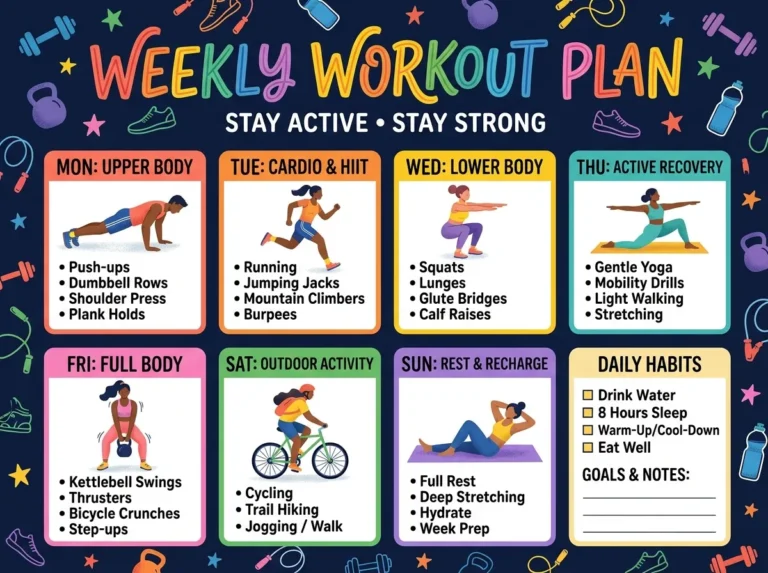
6. Adopt a split routine that separates upper and lower body movements, allowing you to train each muscle group with higher intensity while providing adequate recovery time.
Design your weekly schedule so that you have at least one full day of rest between training the same muscle group to prevent overtraining.
Structuring Your Weekly Routine
7. Dedicate one session specifically to legs glutes, as these large muscle groups require significant energy and respond well to heavy, controlled movements like lunges or hip thrusts.
Use a mirror or ask a partner to check your form during goblet squats to ensure you are hitting proper depth and keeping your spine neutral.
8. Integrate your cardio sessions on separate days or at the end of your resistance training to avoid compromising your strength performance during the main workout.
Try low-impact steady-state cardio like walking or cycling for twenty minutes after your lifting session to improve blood flow without adding excessive systemic fatigue.
9. Rotate your exercises every four to six weeks to keep your muscles challenged and prevent the stagnation that often occurs when performing the same movements indefinitely.
Swap your standard barbell bench press for a dumbbell variation to work on stabilizing muscles and addressing any strength imbalances between your left and right sides.
10. Keep your total gym time under seventy-five minutes to ensure that your intensity remains high and your cortisol levels stay within a healthy, manageable range.
Set a timer on your phone for each rest period between sets to keep your training session efficient and prevent long, unproductive breaks.
Mastering Sets and Reps for Growth
11. Utilize a rep range of eight to twelve for most of your strength training, as this is widely considered the sweet spot for hypertrophy and building muscle.
Select a weight that makes the last two reps of every set feel challenging but still allows you to maintain perfect form until the very end.
12. Perform three to four sets per exercise to provide enough volume to stimulate muscle fibers without leading to excessive soreness that hinders your next workout.
Rest for sixty to ninety seconds between sets to allow your heart rate to settle and your muscles to recover enough for the next effort.
13. Experiment with drop sets or supersets on your final exercise of the day to increase intensity and push your muscles closer to total failure.
Perform a set of lateral raises immediately followed by a set of front raises to target your shoulders from different angles without taking a rest break.
14. Adjust your rep schemes based on your goals, moving toward lower reps with heavier weights if your primary focus is increasing your raw maximal strength.
Use a weight that allows you to complete only five or six reps if you are working on your primary compound lifts like the back squat.
15. Listen to your body during every set and stop if you feel sharp pain, as the best Results Weight Training Plan For Females relies on longevity rather than injury.
Consult the American College of Sports Medicine guidelines to learn more about safe and effective resistance training standards for various populations and fitness levels.
Nutrition and Fueling for Performance
16. Prioritize protein intake throughout the day, aiming for a significant portion of your total calories to come from lean sources like chicken, fish, tofu, or legumes.
Track your protein intake for three days to see if you are hitting your target, then make adjustments to your snacks if you are consistently falling short.
17. Consume complex carbohydrates before your training sessions to ensure your muscles have the glycogen stores needed to power through intense lifts and maintain high energy.
Eat a banana or a slice of whole-grain toast with nut butter about an hour before you head to the gym for a quick energy boost.
18. Stay hydrated by drinking water consistently throughout the day, as even mild dehydration can significantly decrease your strength output and mental focus during exercise.
Carry a reusable water bottle with you everywhere to make hydration a subconscious habit rather than something you have to remember to do during your workout.
19. Avoid extreme calorie restriction, as your body needs sufficient energy to build muscle and perform at its best during your challenging weight training sessions.
Increase your portions of vegetables and healthy fats if you notice your energy levels dropping during the second half of your weekly training cycle.
20. Consider how your overall caloric intake impacts your recovery, adjusting your food choices based on whether your primary goal is muscle gain or body fat reduction.
Use a simple food diary to identify hidden sources of sugar or processed snacks that might be displacing more nutrient-dense food options in your daily diet.
21. Include overhead press variations to build strong, functional shoulders that support your posture and improve your ability to perform everyday tasks like lifting overhead.
Start with a seated dumbbell press if you are a beginner, then progress to a standing barbell version as your core stability and strength increase.
Optimizing Exercises for Arms and Shoulders
22. Add triceps extensions to your routine, as these muscles make up a large portion of your upper arm and respond well to isolation movements.
Use a cable machine to perform triceps pushdowns with a rope attachment, focusing on a slow, controlled squeeze at the bottom of the movement.
23. Incorporate bicep curls using dumbbells or resistance bands to ensure balanced arm development and improved grip strength for other pulling exercises in your routine.
Stand against a wall while performing your curls to prevent your body from swinging and to ensure your biceps are doing all the work.
24. Utilize rows to target the muscles in your back and the rear of your shoulders, which helps maintain shoulder health and prevents rounded posture.
Pull your shoulder blades together at the peak of every row to ensure you are engaging the muscles of your upper back properly.
25. Perform lateral raises to specifically target the side head of your deltoids, which creates a toned appearance and enhances the width of your upper body.
Use lighter weights for lateral raises and focus on leading with your elbows rather than your hands to isolate the target muscle group effectively.
26. Integrate planks and bird-dogs into your warm-up or cool-down to build deep core stability that protects your spine during heavier compound lifting sessions.
Hold your plank for thirty seconds while focusing on tucking your pelvis and squeezing your glutes to ensure your core is fully engaged throughout.
27. Practice deadlifts or kettlebell swings to strengthen your posterior chain, which includes your back, glutes, and hamstrings, providing a solid base for all other movements.
Watch videos of your form to ensure your back remains flat throughout the entire motion, keeping the weight close to your shins to reduce lower back strain.
Developing a Strong Core and Back
28. Use cable face pulls to improve your posture and strengthen the muscles that stabilize your shoulder blades, which is vital for long-term joint health.
Pull the cable toward your forehead while keeping your elbows high and outward to target the small muscles in the rear of your shoulders.
29. Add back extensions to your routine, focusing on using your lower back and glutes to lift your torso rather than relying on momentum.
Hold a light weight plate against your chest to increase the difficulty of the movement once you can perform fifteen repetitions with perfect control.
30. Focus on mind-muscle connection during every back exercise, visualizing the muscles working as you pull and release the weight during your sets.
Pause for a second at the top of every pull-up or row to feel the contraction in your lats and middle back muscles.
31. Record your weight, measurements, and progress photos every few weeks to get a holistic view of how your body is changing beyond just the scale.
Take your progress photos in the same lighting and at the same time of day to ensure you are comparing like with like each time.
32. Monitor your strength gains by keeping track of the heaviest weight you can lift for a specific number of reps on your primary compound exercises.
Celebrate small victories, such as adding five pounds to your squat or performing one extra rep, as these are indicators of long-term success.
33. Evaluate your energy levels and mood throughout the week to ensure that your current intensity is sustainable and not leading to burnout or exhaustion.
Adjust your workout intensity downward for one week if you find yourself feeling unusually tired or irritable, as this is a sign of systemic fatigue.
Tracking Progress and Adjusting the Plan
34. Update your routine every few months to introduce new movements or change the order of your exercises to keep your brain and body engaged.
Switch from a traditional barbell bench press to a neutral grip dumbbell press to provide your shoulders with a different stimulus and range of motion.
35. Listen to feedback from your body, such as persistent joint pain or extreme soreness, and adjust your volume or technique to prevent potential injury.
Consider working with a qualified trainer for a single session to check your technique if you suspect your form is limiting your progress or causing pain.
Common Questions About Weight Training
How many times a week should a female lift weights for optimal results?
Most individuals see the best results by lifting weights three to four times per week. This frequency allows for enough stimulus to build muscle while providing sufficient rest days for recovery and tissue repair.
How long does it take to see visible results from weight training?
While you may notice improvements in strength and energy within the first few weeks, visible changes in muscle definition and body composition typically take twelve to sixteen weeks of consistent training.
What is the difference between strength training and cardio for fat loss?
Strength training builds lean muscle mass, which increases your resting metabolic rate, whereas cardio primarily burns calories during the activity itself. Combining both is often the most effective approach for health.
Do I need to lift very heavy weights to see a change in my body?
You do not need to lift maximal weights to see results, but you must use a load that feels challenging for your chosen rep range. Progressive overload is more important than the absolute weight.
Can weight training make me look bulky?
Building significant muscle mass requires a specific, high-calorie diet and years of dedicated, heavy training. Most women will find that weight training leads to a toned, strong, and athletic appearance.
Maintaining Long-Term Fitness Success
The journey toward finding the best Results Weight Training Plan For Females is a process of refinement and consistency rather than a sprint to a finish line. By focusing on fundamental movements, prioritizing recovery, and tracking your progress, you create a system that evolves with your changing needs. Remember that your strength is not just about the numbers on the bar but about the confidence and health you build throughout the process.
Stay patient with yourself as you navigate the ups and downs of your training. If you hit a plateau, view it as an opportunity to adjust your intensity, nutrition, or exercise variety.
Keep the focus on the long-term benefits of regular exercise, and you will find that your hard work pays off in improved vitality and physical capacity. Feel free to reach out to local fitness communities or trainers if you need further guidance on your fitness path.