At-Home Dumbbell Leg Day Exercises For Women
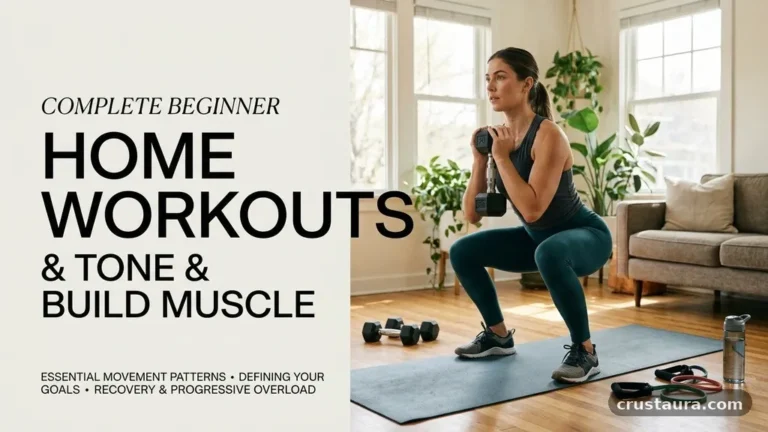
Building lower body strength is highly effective when you incorporate at-home dumbbell leg day exercises for women into your routine. You don’t need a crowded gym or expensive machines to see progress in your glutes, hamstrings, and quads. By using a pair of dumbbells, you can create enough resistance to challenge your muscles, improve your balance, and boost your overall functional strength.
Whether you are a beginner or looking to refine your current training, these movements provide the foundation for a stronger, more capable physique. This approach to fitness offers convenience and consistency, allowing you to maximize results on your own schedule while focusing on proper form and steady progression.
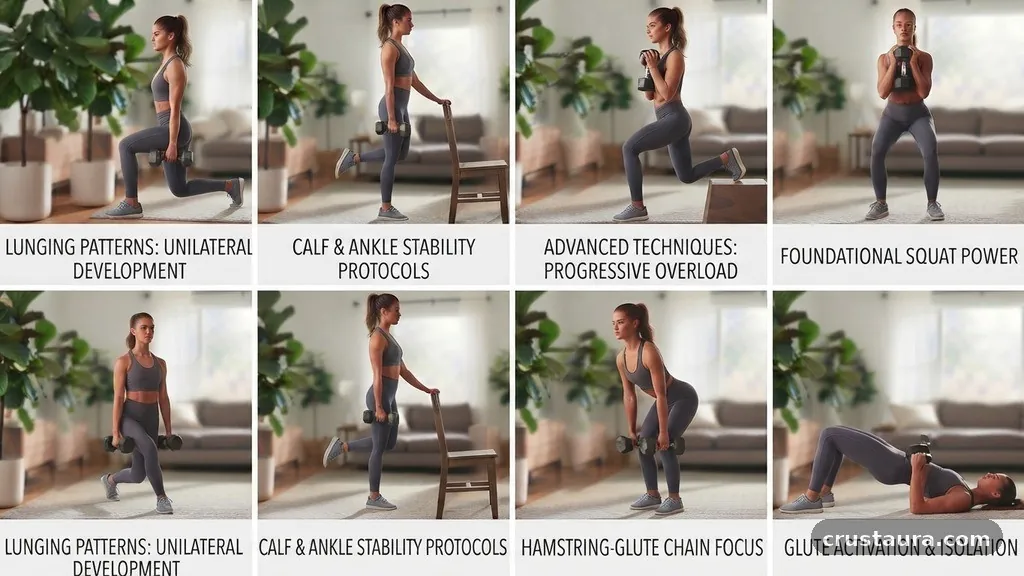
Foundational Squat Variations for Power
1. The classic goblet squat requires holding a single weight against your chest to act as a counterbalance. This encourages an upright torso and deeper range of motion.
Perform three sets of twelve repetitions, focusing on keeping your heels planted firmly on the floor throughout the entire movement.
2. Sumo squats utilize a wide stance with toes pointed outward to target the inner thighs and glutes. Hold one dumbbell vertically between your legs with both hands.
Maintain a neutral spine and ensure your knees track directly over your toes to prevent unnecessary strain during the descent.
3. Squat pulses add intensity by forcing you to hold the bottom position of the movement for a brief moment before rising. Use lighter weights for this variation.
Pulse for three seconds at the lowest point, keeping the tension in your glutes rather than letting your hips collapse toward the floor.
4. Offset squats involve holding one dumbbell in only one hand while squatting, which forces your core to work harder to maintain balance. Switch sides every set.
Fight the urge to lean toward the weighted side by engaging your obliques and keeping your shoulders perfectly level throughout the rep.
Mastering Hinge Movements for Posterior Chain
5. Box squats allow you to practice depth by sitting back onto a chair or bench until your glutes lightly tap the surface. Keep the weight held at your chest.
Focus on the explosive upward phase, driving through your heels to return to a standing position without using momentum from the seat.
6. Romanian deadlifts focus on the stretch in your hamstrings while keeping a slight bend in your knees. Lower the weights toward your mid-shin level slowly.
Keep the dumbbells as close to your legs as possible to protect your lower back and ensure the tension stays on the posterior chain.
7. Single-leg deadlifts challenge your stability and coordination while isolating one side of your body at a time. Hold a weight in the hand opposite the working leg.
Find a focal point on the wall in front of you to help maintain your balance as you hinge forward with a flat back.
8. Staggered stance deadlifts offer a middle ground between bilateral and unilateral work. Place one foot slightly behind the other for better stability during the hinge.
Shift most of your body weight onto the front foot, ensuring that your hips move backward rather than dropping straight down toward the ground.
9. Kettlebell-style swings can be performed with a single dumbbell held by one end. Use your hips to generate the power, not your arms or shoulders.
Snap your hips forward forcefully at the top of the movement, squeezing your glutes hard to complete each repetition with total control.
Lunging Patterns for Unilateral Development
10. Deficit deadlifts require standing on a slightly elevated surface like a sturdy plate to increase the range of motion. This deepens the stretch in your glutes.
Ensure your core remains braced throughout the entire movement to avoid rounding your spine when you reach toward the lower position.
11. Reverse lunges are often easier on the knees than forward lunges because they keep your front shin vertical. Step back and drop your back knee down.
Keep your torso upright and distribute your weight evenly between the front heel and the ball of your back foot for maximum stability.
12. Walking lunges force you to stabilize your body after every single step. Hold two dumbbells at your sides to increase the load on your legs.
Take controlled steps and focus on keeping your hips square to the front, preventing your knees from caving inward during the transition phase.
13. Lateral lunges target the inner and outer thighs by moving in the frontal plane. Step wide to the side while keeping one leg perfectly straight.
Push off the bent leg to return to the center, feeling the glute engage as you transition back to your standing start position.
Building Glute Strength with Floor Exercises
14. Curtsy lunges involve stepping one foot behind the other at a diagonal angle. This recruits the glute medius for better hip stabilization and development.
Maintain a steady rhythm and watch your front knee to ensure it stays aligned with your foot rather than twisting during the lunge.
15. Elevated rear-foot lunges, or Bulgarian split squats, are the gold standard for unilateral leg training. Place your back foot on a chair or couch.
Lean slightly forward to bias your glutes, or stay upright to focus on your quads, depending on your specific goals for the session.
16. Glute bridges are performed by lying on your back and lifting your hips toward the ceiling. Place a dumbbell across your pelvic area for added resistance.
Squeeze your glutes at the peak of the bridge, ensuring you don’t overarch your lower back by keeping your ribs tucked in tight.
17. Single-leg glute bridges isolate each glute, which is helpful for correcting muscle imbalances. Keep one leg in the air while performing the hip extension.
Drive through the heel of the planted foot and keep your hips level throughout the entire range of motion to ensure equal work.
18. Frog pumps are a variation where you place the soles of your feet together and knees wide. This position maximizes glute activation during hip extension.
Perform high-repetition sets to feel the burn in your glutes, keeping your chin tucked toward your chest to maintain a neutral spine position.
19. Weighted hip thrusts use a bench or sofa to elevate your upper back. This creates a longer range of motion than a standard floor bridge.
Find more details on proper hip extension techniques by visiting the National Strength and Conditioning Association website to improve your form and safety.
Calf and Ankle Stability Protocols
20. Donkey kicks with a dumbbell held behind your knee provide a unique way to target the glutes. Squeeze the weight firmly to keep it from dropping.
Move slowly and maintain a flat back, avoiding any excessive arching as you extend your leg upward toward the ceiling behind you.
21. Standing calf raises can be performed on the edge of a step for a larger range of motion. Hold dumbbells to increase the intensity of the work.
Pause at the very top of the movement to maximize the contraction in your calf muscles before lowering slowly back down toward the floor.
22. Seated calf raises target the soleus muscle rather than the gastrocnemius. Rest the dumbbells on your knees to add weight while you are sitting down.
Focus on a full range of motion, letting your heels drop as low as possible before pushing back up onto your toes with control.
23. Single-leg calf raises challenge your balance and ankle strength simultaneously. Hold onto a wall or chair for support if you find yourself wobbling too much.
Perform these barefoot if possible to improve your foot arch strength and overall proprioception, which helps with daily movement and athletic performance.
Core Integration for Leg Stability
24. Farmer’s carries involve walking while holding heavy dumbbells. This builds endurance in your lower legs and strengthens your core and grip at the same time.
Keep your posture tall and your steps deliberate, ensuring your ankles stay stable and don’t roll as you move across the floor.
25. Toe walks involve walking on your tiptoes while holding light dumbbells. This helps strengthen the muscles surrounding the ankle and improves your balance.
Maintain a steady pace and keep your heels off the ground for the duration of the set to build endurance in the lower legs.
26. Weighted side bends help build the obliques, which are essential for stabilizing the hips during single-leg exercises. Hold one dumbbell in one hand.
Keep your movements slow and controlled, ensuring you are bending strictly at the waist rather than rotating your torso as you go down.
27. Dumbbell woodchoppers require rotation while holding a weight. This engages the core and teaches you how to transfer power from your legs to your torso.
Pivot your back foot as you rotate to protect your knees, keeping your core braced tightly throughout the entire arc of the movement.
28. Suitcase carries involve holding a heavy weight on one side while walking. This forces your core to resist lateral flexion and stabilizes your hips.
Switch hands halfway through your walk to ensure both sides of your body receive equal training and that your core stays balanced.
Advanced Techniques for Progressive Overload
29. Planks with a dumbbell pull-through challenge your core stability while you are in a push-up position. Reach under your body to move the weight.
Keep your hips as still as possible, preventing them from rocking side to side as you move the dumbbell from one side to the other.
30. Standing overhead presses with a narrow stance force your core to stabilize your entire body. This connects your upper and lower body strength.
Engage your glutes and core to create a solid base, ensuring your back does not arch while you press the weight overhead.
31. Tempo training involves controlling the speed of your movements, such as taking four seconds to lower into a squat. This increases time under tension.
Focus on the eccentric phase, which is the lowering part, to build more strength and muscle definition in your legs and glutes.
32. Supersets combine two exercises back-to-back with no rest. For example, pair a squat with a lunge to keep your heart rate elevated and muscles burning.
Choose two movements that target different parts of the legs to avoid premature fatigue while maintaining high intensity throughout the entire workout session.
33. Drop sets involve performing a set to failure, then immediately dropping to a lighter weight to continue for more repetitions without any rest period.
Use this technique sparingly at the end of your workout to push your muscles past their normal limit for better growth and endurance.
Recovery and Maintenance Strategies
34. Paused repetitions force you to hold the most difficult part of an exercise for several seconds. This eliminates momentum and builds explosive starting strength.
Hold the pause for two to three seconds, ensuring your form remains perfect and that you aren’t compensating by shifting your weight around.
35. Rest-pause sets involve doing a set, resting for ten seconds, and doing a few more reps. This extends the set and increases the metabolic demand.
Keep the rest periods short and consistent to ensure you are getting the full benefit of the increased volume on your leg muscles.
36. Foam rolling your quads and hamstrings helps release muscle tension after a hard session. Spend at least five minutes rolling out your legs after working out.
Focus on tender spots, moving slowly over them to help increase blood flow and reduce the feeling of tightness in your lower body.
37. Static stretching is best performed after your workout when your muscles are warm. Hold each stretch for at least thirty seconds for maximum benefit.
Target your hip flexors, hamstrings, and glutes to improve your range of motion and prevent the stiffness that can come from regular strength training.
38. Active recovery days are vital for long-term progress. Go for a light walk or do some yoga to keep your joints moving without heavy strain.
Listen to your body and take a full rest day if you feel excessive soreness or fatigue that prevents you from maintaining good form.
Foundational Squat Variations for Power (cont.)
39. Proper hydration is essential for muscle function and recovery. Drink plenty of water throughout the day, especially before and after your at-home leg workouts.
Track your intake to ensure you are meeting your daily goals, as even mild dehydration can significantly impact your strength and energy levels.
40. Nutrition plays a huge role in muscle repair. Ensure you are getting enough protein after your training sessions to support muscle growth and recovery.
Prepare simple, protein-rich snacks like Greek yogurt or hard-boiled eggs to have ready immediately following your workout to help your body recover efficiently.
Frequently Asked Questions
Can I see results with only dumbbells at home?
Yes, you can absolutely build significant leg strength and muscle definition using dumbbells. By applying principles like progressive overload—increasing weight, reps, or decreasing rest times—you continue to challenge your muscles effectively.
How often should I perform these leg exercises?
Two to three times per week is ideal for most people. This frequency allows your muscles enough time to recover and grow while maintaining the consistency needed for long-term results.
Are four exercises enough for a complete leg day?
Four exercises can be sufficient if they are compound movements that target multiple muscle groups, such as squats, deadlifts, lunges, and glute bridges. Quality of movement always beats quantity.
How do I know if I am lifting heavy enough?
You should feel challenged during the final two repetitions of every set. If you can easily complete all your reps without feeling any fatigue, it is time to increase the weight.
What if I don’t have heavy dumbbells?
You can increase the intensity by slowing down the tempo of your movements, increasing the number of repetitions, or using unilateral exercises that focus on one leg at a time.
Closing Thoughts
Consistency remains the most important factor when you commit to at-home dumbbell leg day exercises for women. By focusing on your form and gradually increasing the challenge, you will notice improvements in your strength, stability, and confidence over time. Remember that every movement you perform builds a stronger foundation for your daily life.
Do not feel pressured to lift the heaviest weights immediately; focus instead on mastering the mechanics of each squat, lunge, and hinge. As you become more comfortable, you can experiment with different variations to keep your training fresh and effective.
Start with a manageable routine, listen to your body, and enjoy the process of becoming stronger from the comfort of your own home. You have all the tools you need to succeed.