
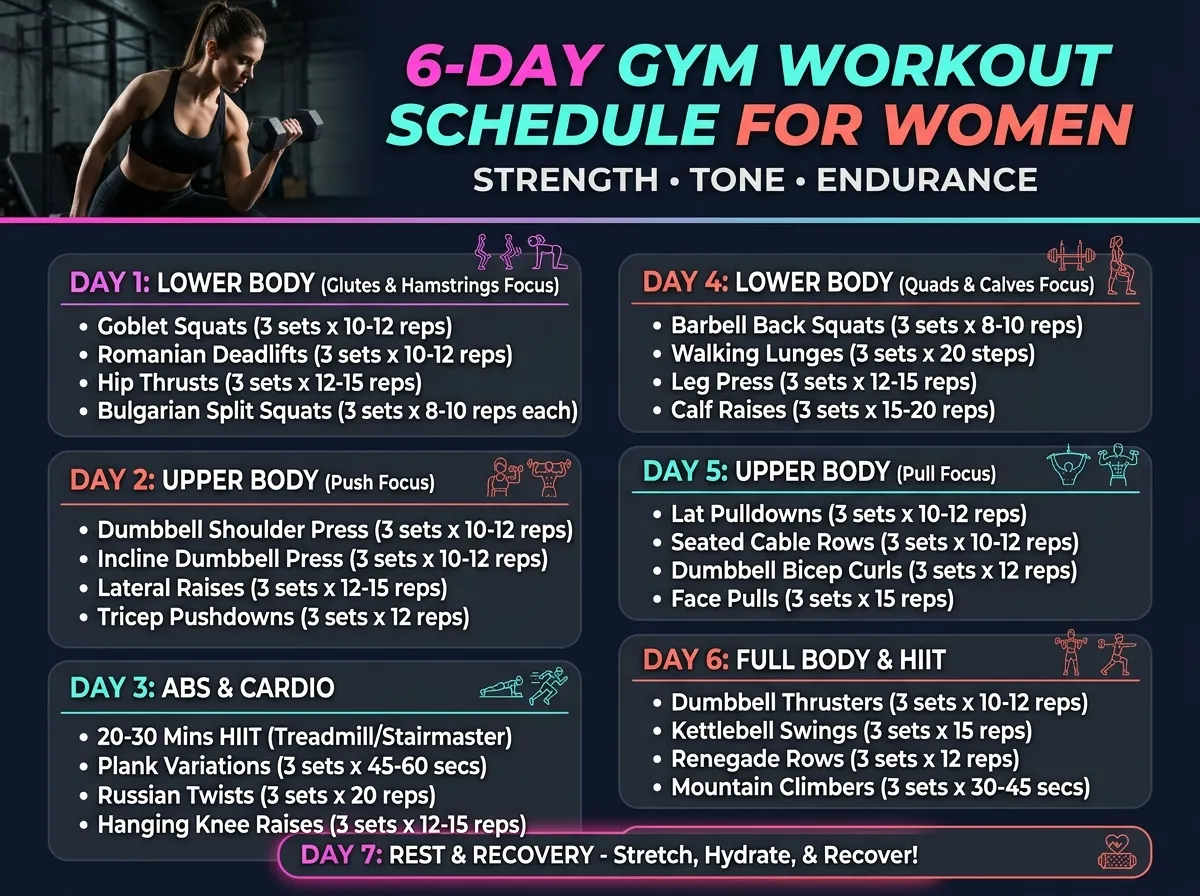
6-Day Gym Workout Schedule For Women
Adopting a 6-Day Gym Workout Schedule For Women provides a structured approach to building strength, improving body composition, and boosting overall fitness. By dedicating consistent time to your training, you allow for a high volume of work that targets specific muscle groups while ensuring they receive adequate recovery.

This routine is designed for those looking to maximize their gym performance through a balanced, progressive approach. Whether you are aiming for muscle gain or improved endurance, this plan offers a path to reach your goals.
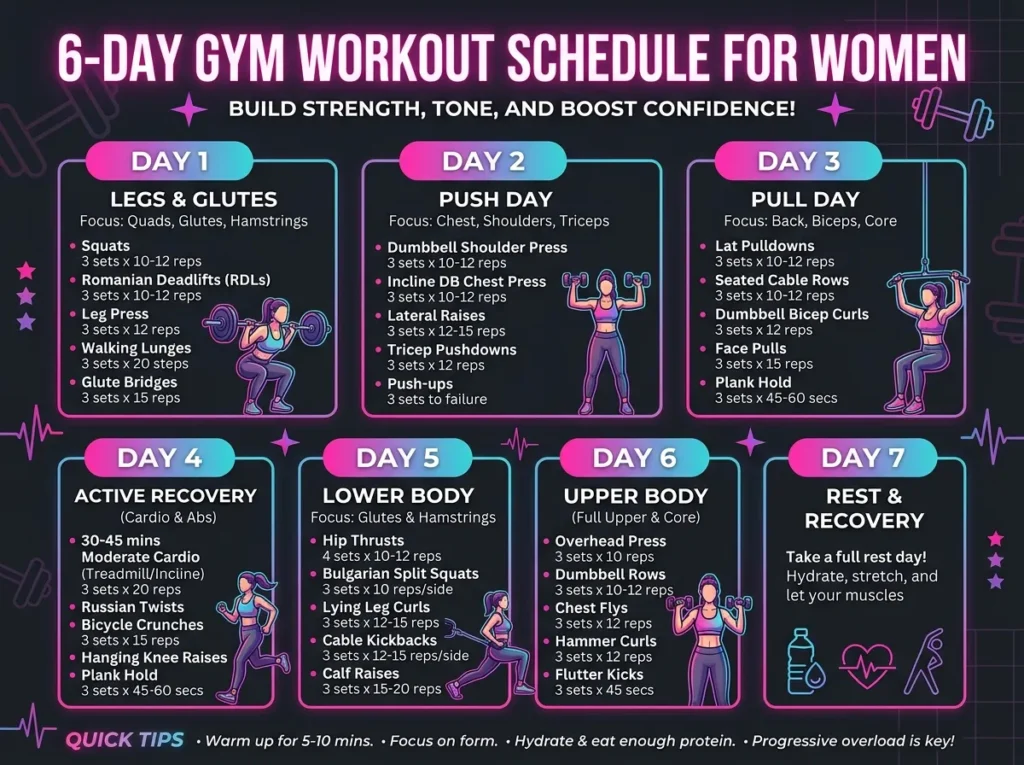
- 2 sets of dumbbells (one light pair for warm-ups, one moderate pair for strength)
- 1 adjustable weight bench
- 1 barbell with varying weight plates
- 1 yoga mat for floor work
- 1 resistance band set (light, medium, and heavy tension)
- 1 water bottle (refilled with 500ml of water)
- 1 gym towel
- 1 pair of supportive athletic shoes
Instructions

- Perform a 5-minute dynamic warm-up including arm circles, leg swings, and light jogging to increase blood flow.
- Execute your primary compound lifts at the start of the session, such as squats or deadlifts, while your energy levels are highest.
- Complete 3 to 4 sets of each exercise, aiming for 8 to 12 repetitions per set to stimulate muscle growth.
- Rest for 60 to 90 seconds between sets to allow for partial recovery and maintain intensity.
- Cool down with 5 minutes of static stretching, focusing on the muscle groups worked during the session to improve flexibility.
Understanding the Split Philosophy

A high-frequency training routine requires a smart distribution of effort to prevent burnout. When you commit to a 6-Day Gym Workout Schedule For Women, you are essentially partitioning your body into segments that allow for maximum intensity without overtaxing a single muscle group.
The most effective approach usually involves an “Upper/Lower” split or a “Push/Pull/Legs” structure. This ensures that while one half of your body is working, the other is recovering, which is vital for long-term progress.
Consistency is the primary driver of results in this type of regimen. By repeating the cycle twice per week, you hit every major muscle group twice, which is scientifically proven to be more effective for hypertrophy than a single weekly session.
You must be intentional about your movement patterns, ensuring that your form remains perfect even as you increase the weight. This balance between volume and recovery is what separates a sustainable plan from one that leads to injury.
Structuring the Push Day

Push days focus on the muscles responsible for moving weight away from the body. This includes your chest, shoulders, and triceps.
Exercises like bench presses, overhead presses, and lateral raises are staples here. You want to prioritize compound movements that recruit multiple joints before moving on to isolation work that targets specific heads of the deltoids or the triceps.
Focusing on these movements helps build a strong foundation for your upper body. When performing lateral raises, for instance, keep your movements controlled and avoid using momentum to swing the weights.
This discipline ensures that your shoulders do the actual work, leading to better definition and strength gains. Remember that your triceps assist in almost every chest exercise, so plan your rest intervals accordingly to avoid premature fatigue.
Mastering the Pull Day

Pull days are essential for developing a balanced physique and protecting your posture. These sessions target your back and biceps, utilizing movements like rows, lat pulldowns, and bicep curls.
A strong back is the foundation of a healthy spine and provides the stability needed for heavy lifts on other days. You should aim to feel the muscles in your back engaging rather than just pulling with your arms.
Incorporate variations of rows to target different angles of the lats and rhomboids. For example, a bent-over barbell row builds raw strength, while a seated cable row allows for a better squeeze at the peak of the contraction.
Bicep curls should be performed with a full range of motion, from a complete extension at the bottom to a full contraction at the top. This focused approach ensures your pulling muscles are sufficiently stimulated to grow and recover.
Focusing on Lower Body Development
Leg days are often the most taxing but yield the highest return on investment. Your lower body contains the largest muscle groups, and training them thoroughly helps boost your metabolic rate.
Squats, lunges, and deadlifts should form the core of your routine. These movements force your core to engage, providing a full-body challenge that improves functional strength.
Don’t neglect the posterior chain, which includes your glutes and hamstrings. Incorporating movements like Romanian deadlifts or kettlebell swings helps balance the development of your legs.
If you find your progress stalling, look into the American College of Sports Medicine guidelines for evidence-based resistance training. Ensuring that your calf muscles are also trained through targeted raises will provide a balanced look and support ankle stability during heavy compound lifts.
Prioritizing Recovery and Nutrition
Training six days a week is demanding, making recovery your secret weapon. If you don’t sleep enough or provide your body with the right fuel, your performance will suffer.
Aim for seven to nine hours of quality sleep, which is when your body repairs the micro-tears created during training. Nutrition also plays a massive role; you need adequate protein to support muscle repair and complex carbohydrates to replenish your glycogen stores.
Hydration is equally important for maintaining peak power output during your workouts. Drinking water consistently throughout the day prevents cramping and keeps your joints lubricated.
If you feel exceptionally sore, consider active recovery, such as a light walk or yoga, rather than complete inactivity. This approach keeps your blood flowing and aids in clearing metabolic waste from your muscles.
Managing Intensity and Progression
Progressive overload is the concept of gradually increasing the difficulty of your workouts over time. This can mean adding more weight, performing more repetitions, or reducing your rest time.
If you do the exact same thing every week for months, your body will eventually stop adapting. Keep a training log to track your numbers; seeing progress on paper is a powerful motivator.
However, intensity should be managed to avoid overtraining. Not every session needs to be a “personal best” attempt. Some days should focus on technique and muscle connection, while others can push your limits.
Listen to your body; if you feel sharp pain or persistent exhaustion, take an extra rest day. Sustainable growth is always better than a quick burst of intensity followed by a month off due to injury.

Tips for Maintaining Consistency
Staying consistent with a 6-day plan requires planning and discipline. Prepare your gym bag the night before so you have fewer barriers to getting out the door.
Find a gym time that fits your schedule, whether it’s early in the morning or late at night, and treat those hours as non-negotiable appointments. Having a clear plan for each session prevents the “what should I do today” indecision that often leads to skipped workouts.
It is helpful to vary your exercises occasionally to keep things interesting. If you find yourself dreading a specific movement, find a suitable alternative that works the same muscle group.
For instance, if barbell squats are bothering your lower back, switch to goblet squats or a leg press machine. The best workout is the one you actually enjoy and can perform consistently over the long term.
FAQ
Is a 6-day gym schedule too much?
For most people, a 6-day split is sustainable provided the volume is managed correctly. By alternating muscle groups, you ensure that no single body part is being trained to failure every single day, allowing for sufficient recovery.
What if I miss a day?
Missing an occasional workout won’t ruin your progress. Simply pick up where you left off on the next scheduled day rather than trying to cram two workouts into one, which often leads to fatigue and poor form.
How do I know if I am lifting enough weight?
You should choose a weight that makes the last two repetitions of every set feel challenging but achievable with good form. If you can easily complete all your reps with perfect technique, it is time to increase the resistance slightly.
Should I do cardio on these days?
You can include light cardio, such as walking or cycling, as a warm-up or cool-down. If your primary goal is muscle gain, keep intense cardio to a minimum to ensure you have enough energy for your strength training.
Conclusion
Following a 6-Day Gym Workout Schedule For Women is a highly effective way to transform your fitness and build long-term strength. By focusing on consistent, progressive training, you provide your muscles with the stimulus they need to adapt and grow. Remember that success in the gym is a marathon, not a sprint; prioritize your recovery, fuel your body properly, and stay patient with your results.
As you become more comfortable with these movements, you will likely find that your confidence in the gym grows alongside your physical capabilities. Listen to your body’s signals, adjust your intensity when necessary, and stay dedicated to your routine. Embracing this disciplined approach to your training will help you achieve your goals and maintain a healthy, active lifestyle for years to come.
6-Day Gym Workout Schedule For Women

Adopting a 6-Day Gym Workout Schedule For Women provides a structured approach to building strength, improving body composition, and boosting overall fitness .
Ingredients
- 2 sets of dumbbells (one light pair for warm-ups, one moderate pair for strength)
- 1 adjustable weight bench
- 1 barbell with varying weight plates
- 1 yoga mat for floor work
- 1 resistance band set (light, medium, and heavy tension)
- 1 water bottle (refilled with 500ml of water)
- 1 gym towel
- 1 pair of supportive athletic shoes
Instructions
- Perform a 5-minute dynamic warm-up including arm circles, leg swings, and light jogging to increase blood flow.
- Execute your primary compound lifts at the start of the session, such as squats or deadlifts, while your energy levels are highest.
- Complete 3 to 4 sets of each exercise, aiming for 8 to 12 repetitions per set to stimulate muscle growth.
- Rest for 60 to 90 seconds between sets to allow for partial recovery and maintain intensity.
- Cool down with 5 minutes of static stretching, focusing on the muscle groups worked during the session to improve flexibility.
Similar Posts
6-Day resulted Gym Workout Schedule For Women
Adopting a consistent 6-day gym workout schedule for women provides the structure necessary to build lean muscle, increase metabolic rate, and improve overall functional strength. By committing to this frequency, you allow for targeted muscle group focus while ensuring enough volume to see tangible physical changes over time. This approach requires careful planning to balance…
Weekly Weight Lifting Schedule For Women
Building a consistent weekly weight lifting schedule for women provides the foundation for long-term health, metabolic efficiency, and functional strength. Whether you are a beginner or looking to refine your current routine, structuring your training around compound movements helps ensure balanced development across your entire physique. By dedicating specific days to targeted muscle groups, you…
3 Realistic Weekly Workout Plans For Women At Home
Finding consistent, sustainable ways to stay active is the primary hurdle for most people trying to maintain a fitness routine. When you prioritize realistic weekly workout plans for women at home, you remove the barriers of gym commutes and expensive memberships, allowing you to build muscle and improve your cardiovascular health on your own terms….