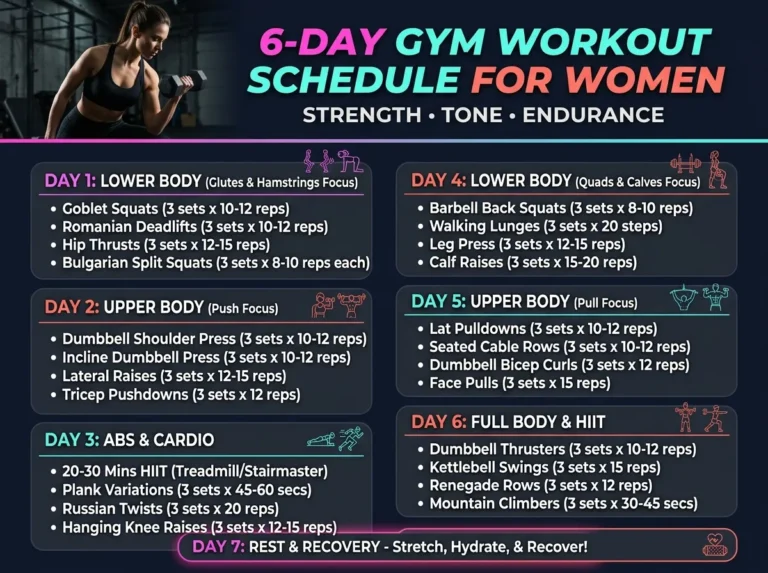

Weekly Weight Lifting Schedule For Women
Building a consistent weekly weight lifting schedule for women provides the foundation for long-term health, metabolic efficiency, and functional strength. Whether you are a beginner or looking to refine your current routine, structuring your training around compound movements helps ensure balanced development across your entire physique.
By dedicating specific days to targeted muscle groups, you allow for adequate recovery while maximizing the stimulus required for growth and bone density improvements. This approach to training helps you manage your time effectively while hitting the necessary volume to see real changes in your strength and body composition over the coming months.
Foundational Principles for Your Strength Program

1. Prioritize compound movements like squats, deadlifts, and presses, as these recruit multiple muscle groups simultaneously to trigger the most significant systemic strength adaptations.
Incorporate three sets of eight to ten repetitions for each primary compound lift during your first two sessions of the week to build a solid base.
2. Maintain a consistent frequency of at least three days per week to ensure your body receives the repeated signal needed to synthesize new muscle tissue.
Schedule your resistance training on non-consecutive days, such as Monday, Wednesday, and Friday, to give your central nervous system time to recover between sessions.
3. Focus on progressive overload by gradually increasing the weight, reps, or sets over time to prevent plateaus and keep your physical progress moving forward.
Keep a simple logbook or use a mobile app to record the weight used for every exercise so you can aim to add a small increment each week.
4. Allow for adequate rest periods between sets, typically ranging from sixty to ninety seconds, to ensure you can perform each rep with proper form and intensity.
Use a stopwatch or your phone timer to strictly monitor your rest intervals, preventing them from drifting too long while you chat or check your notifications.
5. Balance your upper body pushes and pulls to maintain healthy shoulder mechanics and prevent posture issues common in sedentary lifestyles.
Perform an equal number of sets for your back, such as rows, as you do for your chest, such as overhead presses or chest presses.
Structuring Your Weekly Split for Optimal Recovery
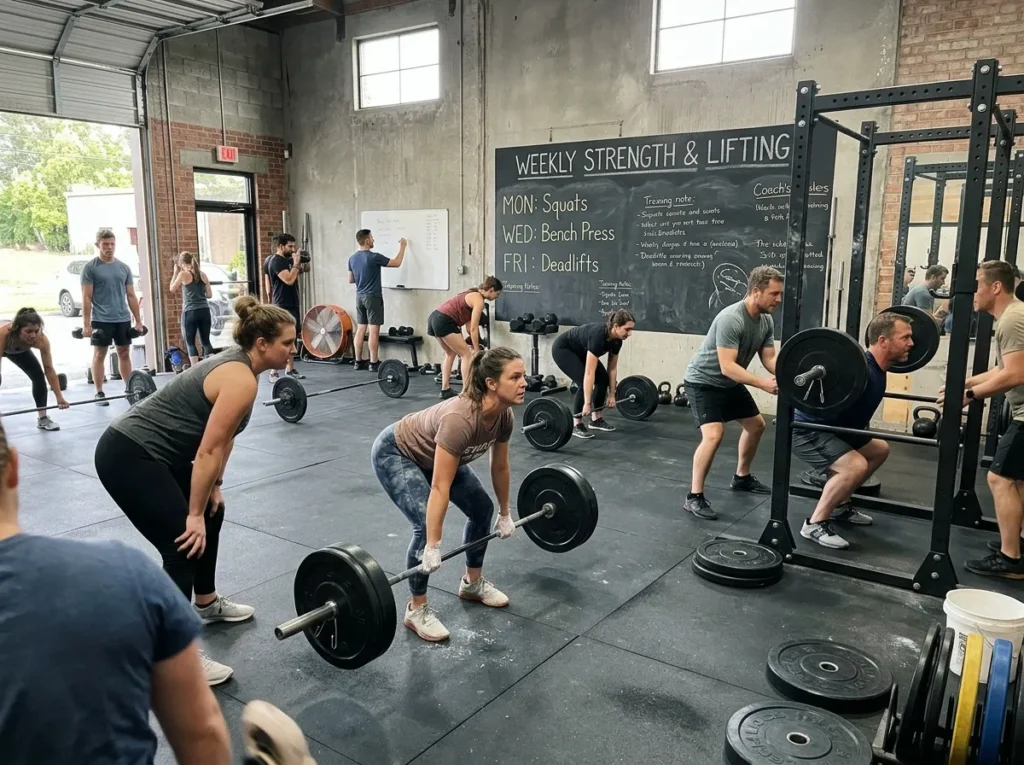
1. Utilize a full-body split for beginners, which involves working every major muscle group during each session to maximize frequency without excessive soreness.
Design your sessions to include one knee-dominant leg exercise, one hip-dominant leg exercise, a vertical push, a vertical pull, and a core movement.
2. Transition to an upper-lower split once you have established a base, allowing you to dedicate more volume to specific areas like the back or legs.
Group your chest, back, and arms on two days, and reserve two other days for lower body movements and abdominal work to ensure balanced development.
3. Incorporate active recovery days, such as light walking or yoga, to keep your joints mobile and blood flowing without adding significant stress to your muscles.
Take a thirty-minute walk on your off days to maintain your activity levels and support recovery without interfering with your primary lifting goals.
4. Schedule your most demanding workouts, such as heavy leg days, at the beginning of the week when your energy levels are typically highest.
Perform your heaviest squats or deadlifts on Monday or Tuesday to ensure you are fresh and can prioritize safety and technique under load.
5. Adjust your total volume based on your life stressors, recognizing that high-stress weeks outside the gym may require slightly lower intensity to prevent burnout.
Scale back your total sets by one or two per exercise if you are feeling exceptionally tired, focusing on maintaining form rather than hitting personal records.
Targeting Specific Muscle Groups for Balanced Results

1. Engage your back muscles with rowing variations, as these are essential for counteracting the forward-slumping posture caused by sitting at desks throughout the day.
Use a dumbbell or cable row machine, ensuring you squeeze your shoulder blades together at the peak of the movement to fully activate your back muscles.
2. Develop your legs through a combination of squats and lunges, which challenge your balance and target both the quadriceps and the gluteal muscles.
Hold a dumbbell in each hand while performing lunges to increase the resistance and challenge your stability as you move across the floor.
3. Strengthen your arms by including targeted isolation movements, which help improve definition and support your performance in compound pushing and pulling exercises.
Add two sets of tricep extensions and bicep curls at the end of your upper body workouts to specifically target your arms without overtraining them.
4. Prioritize core stability exercises that move beyond basic crunches, focusing on anti-rotation and bracing to protect your spine during heavy lifts.
Include planks or dead bugs in your routine, holding each position for forty-five seconds to build deep abdominal strength that carries over to your daily life.
5. Incorporate shoulder work to enhance upper body aesthetics and stability, which is crucial for overhead pressing and general upper body health.
Perform lateral raises with light dumbbells to isolate the side deltoids, keeping your elbows slightly bent and stopping when your arms are parallel to the floor.
Integrating Cardio and Mobility for Longevity

1. View cardio as an optional but beneficial tool for heart health rather than a primary method for weight management, which is better handled by resistance training.
Add twenty minutes of low-intensity steady-state cardio, like cycling or incline walking, after your lifting sessions to support your cardiovascular system without hindering recovery.
2. Dedicate time to dynamic warm-ups before every session to prepare your joints and nervous system for the physical demands of lifting heavy objects.
Spend five minutes doing leg swings, arm circles, and bodyweight squats to increase your body temperature and improve your range of motion before touching any weights.
3. Use static stretching post-workout to help return your muscles to their resting length and promote a sense of relaxation after an intense session.
Hold stretches for major muscle groups for thirty seconds each, breathing deeply to encourage your nervous system to switch into recovery mode.
4. Monitor your heart rate during workouts to ensure you are working within a challenging but sustainable zone that allows you to finish your full routine.
Pay attention to your breathing; if you find yourself unable to speak a full sentence, you may need to reduce your intensity or increase your rest time.
5. Prioritize consistent sleep patterns as the most effective form of recovery, as your body repairs muscle tissue while you are in deep cycles of rest.
Aim for seven to nine hours of quality sleep each night to ensure your hormones are balanced and you are ready for your next training session.
Nutrition and Hydration to Support Your Training

1. Consume adequate protein throughout the day to provide the building blocks necessary for repairing and strengthening the tissues broken down during your workouts.
Target roughly 1.6 grams of protein per kilogram of body weight, spreading your intake across four meals to keep your muscle protein synthesis elevated.
2. Keep your hydration levels high, as even mild dehydration can significantly decrease your strength output and focus during a strenuous lifting session.
Carry a reusable water bottle and aim to drink at least two liters of water throughout the day, increasing this amount on days you train.
3. Use complex carbohydrates as your primary fuel source to provide sustained energy for long workouts, helping you maintain intensity from start to finish.
Eat a meal containing oats, brown rice, or sweet potatoes about two hours before your workout to ensure your glycogen stores are fully topped off.
4. Consider the timing of your post-workout meal to include both protein and carbohydrates, which helps replenish energy stores and kickstart the recovery process.
Prepare a simple smoothie with protein powder and a banana to consume within an hour after finishing your exercise to maximize nutrient delivery to your muscles.
5. Consult official government nutrition resources to ensure your dietary choices align with your long-term health goals and provide the micronutrients your body needs.
Review the guidelines on food groups and portion sizes to make informed decisions about your daily intake rather than relying on restrictive or fad diets.
Consistency and Tracking for Long-Term Progress

1. Recognize that consistency over months and years is far more valuable than short bursts of extreme effort followed by long periods of inactivity.
Commit to a schedule you can realistically maintain for three months, even if that means starting with only two days per week until you build momentum.
2. Document your workouts with a focus on trends rather than individual days, as some sessions will naturally feel harder than others due to outside factors.
Look back at your training logs every four weeks to see if your strength has increased on key lifts like the squat or overhead press.
3. Adjust your routine as your lifestyle changes, acknowledging that a weekly weight lifting schedule for women is a flexible tool rather than a rigid set of rules.
If you have a busy week, condense your workouts into shorter, higher-intensity sessions to keep the habit alive without sacrificing your personal time.
4. Celebrate non-scale victories, such as improved energy levels, better sleep quality, or the ability to perform more reps with the same weight.
Track these markers of health alongside your weight to gain a more holistic view of how your training is positively impacting your overall well-being.
5. Seek professional guidance if you feel stuck or uncertain about your technique, as a few sessions with a trainer can prevent injuries and improve results.
Find a qualified coach to review your form on deadlifts or squats to ensure you are moving safely and effectively as you progress with heavier loads.
Frequently Asked Questions
How many days per week should I lift?
Most women find that three to four days per week provides the best balance between stimulus and recovery, allowing for consistent progress without excessive burnout.
Is it okay to lift heavy weights?
Yes, lifting heavy weights is essential for building strength and bone density, provided you focus on maintaining proper form and increasing the load gradually over time.
Do I need to do cardio if I lift weights?
Cardio is not strictly necessary for muscle building, but it is excellent for your heart health and can improve your work capacity, making your lifting sessions feel easier.
What if I miss a workout session?
Missing one workout will not ruin your progress; simply pick up where you left off on your next scheduled day and continue with your planned routine.
How long should a workout last?
A productive strength session typically lasts between forty-five and sixty minutes, which is usually enough time to complete a warm-up, your primary lifts, and some accessory work.
Conclusion
Developing a consistent weekly weight lifting schedule for women is one of the most effective ways to support your long-term health, strength, and confidence. By focusing on fundamental movements, managing your recovery, and tracking your progress over time, you create a sustainable habit that rewards you with physical and mental benefits.
Remember that your journey is unique, and small, incremental improvements are the key to building a stronger version of yourself. Start by identifying the days that work best for your lifestyle and commit to the process for the next few weeks.
As you gain experience, continue to listen to your body and adjust your intensity to match your current energy levels. Whether you are aiming to build muscle, improve your bone health, or simply feel more capable in your daily life, the effort you put into the gym will pay dividends.
Stay curious about your movement quality, keep challenging yourself with progressive overload, and enjoy the process of becoming stronger. If you have questions about your specific routine, feel free to revisit these sections or consult a professional to ensure your approach remains safe and effective.