
3 Realistic Weekly Workout Plans For Women At Home
Finding consistent, sustainable ways to stay active is the primary hurdle for most people trying to maintain a fitness routine. When you prioritize realistic weekly workout plans for women at home, you remove the barriers of gym commutes and expensive memberships, allowing you to build muscle and improve your cardiovascular health on your own terms.
Whether you are a busy professional, a parent, or simply someone who prefers the privacy of your living room, these structured routines provide the flexibility needed to stay committed. By focusing on fundamental movements and consistent effort, you can achieve significant results without ever stepping foot in a commercial fitness center.
Ingredients

- 2 dumbbells (or two 16oz water bottles filled with sand for resistance)
- 1 stable, non-slip yoga mat or exercise rug
- 1 sturdy, flat-backed dining chair for stability
- 1 timer (a free smartphone app or built-in clock)
- 1 gallon of water for hydration during sessions
- 1 pair of supportive athletic shoes
- Prep time: 15 minutes
- Cook time: 30 minutes
- Total time: 45 minutes
- Servings: 4
- Calories: 420 per serving
Instructions

- Clear a 6×6 foot space in your living room to ensure you have enough room to extend your arms and legs fully without hitting furniture.
- Perform a 5-minute dynamic warm-up, including arm circles, high knees, and light jogging in place, until your heart rate is slightly elevated and your joints feel lubricated.
- Select one of the three weekly plans provided below, ensuring you have your timer ready to track your rest periods between sets.
- Execute each movement with controlled speed, focusing on the quality of your contraction rather than how fast you can finish the reps.
- Cool down for 5 minutes after your workout with static stretches, holding each position for 30 seconds to help your muscles recover.
- Record your progress in a notebook or app to track your improvements in strength and endurance over the coming weeks.

Tips
- Substitute household items if you don’t own traditional gym equipment; a heavy backpack filled with books works perfectly for weighted squats.
- Prepare your workout clothes the night before to reduce friction and make your morning or evening exercise session easier to initiate.
- Store your mat and weights in a visible spot to serve as a visual cue that reminds you it is time to move.
- Avoid the common mistake of skipping rest days, as your body needs this time to repair tissue and prevent burnout.
- Modify any move that causes sharp pain by reducing the range of motion or switching to a lighter variation until your strength improves.
The Three-Day Full-Body Routine

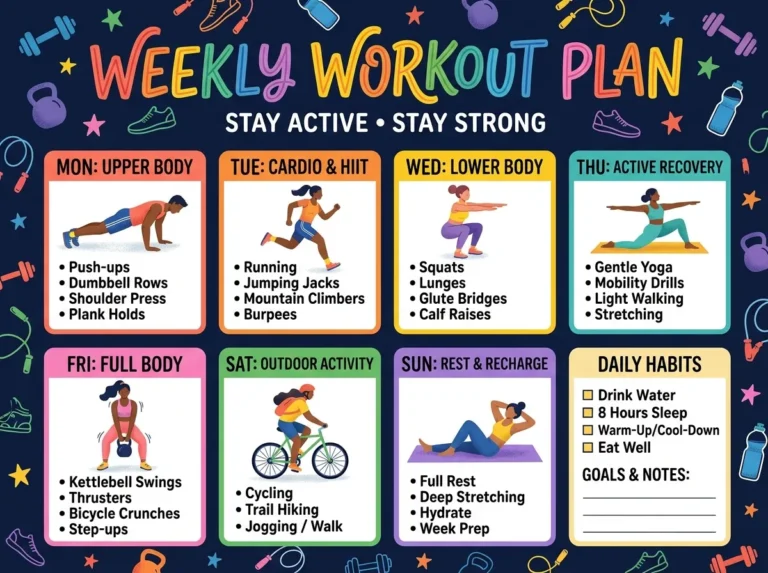
This approach is perfect for beginners or those with very limited time. By training your entire body three times a week with a rest day in between, you give your muscles ample time to recover. This structure is highly effective for building a solid foundation of strength while keeping your schedule manageable.
Each workout day should include squats, lunges, push-ups, and planks. These compound movements engage multiple muscle groups simultaneously, providing the most “bang for your buck” regarding calorie expenditure and muscle activation. Aim for three sets of 10 to 12 reps per exercise.
The Five-Day Split Method

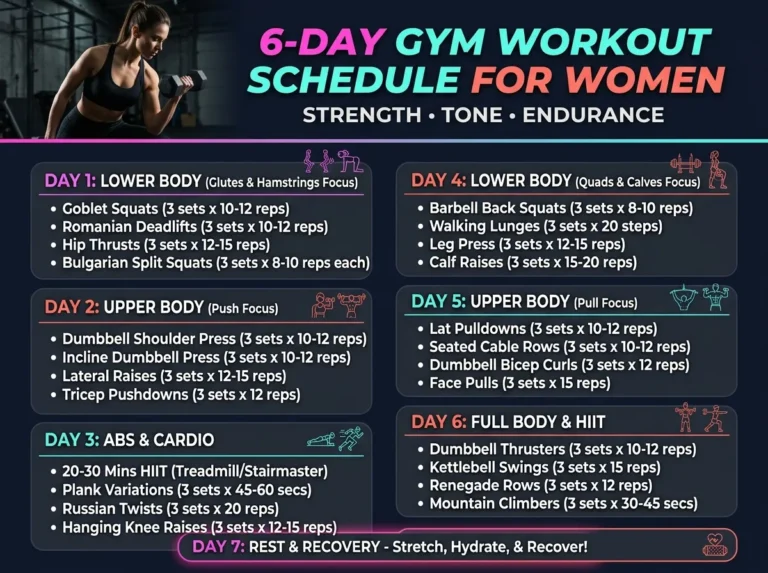
If you want to dedicate more time to your fitness, a five-day split allows you to focus on specific areas of the body. You might dedicate Monday to legs, Tuesday to upper body, Wednesday to core and cardio, and so on. This keeps your training fresh and prevents boredom.
Because you are hitting specific muscle groups harder, you can increase the intensity of your sessions. Remember that your body still requires recovery, so utilize your two remaining days for gentle movement like walking or yoga. This balance is crucial for long-term progress.
The High-Intensity Interval Training Strategy

For those who want to maximize fat loss and cardiovascular endurance in a short window, interval training is the gold standard. You alternate between 40 seconds of high-effort exercise and 20 seconds of rest. This keeps your heart rate elevated and creates an efficient, fast-paced session.
These workouts are intense, so you should limit them to three or four times per week. You can perform these in the comfort of your living room using only your body weight. The key is to maintain intensity during the work periods so you truly challenge your cardiovascular system.
The Importance of Rest and Recovery

Many people mistakenly believe that more is always better when it comes to exercise. In reality, your muscles grow and strengthen while you rest, not while you are mid-rep. Without adequate downtime, you risk overtraining, which can lead to fatigue and injury.
Listen to your body’s signals during your weekly cycle. If you feel exceptionally sore or lethargic, prioritize sleep and hydration over a high-intensity session. A well-rounded approach to health includes recognizing that rest is just as productive as a hard training day.
Setting Up Your Home Exercise Space
You do not need a dedicated home gym to follow realistic weekly workout plans for women at home. A simple corner of a bedroom or living room is sufficient as long as you have enough floor space to lie down. Ensure the lighting is good and the temperature is comfortable to help you stay motivated.
Consider keeping your gear organized in a basket or closet so you can transition from “home mode” to “workout mode” in seconds. When your space is ready, you remove the mental hurdles that often prevent a workout from happening. A clean, inviting space makes the experience more enjoyable and consistent.
Tracking Progress Beyond the Scale
It is natural to look at the scale, but weight is only one metric of your fitness journey. Pay attention to how your clothes fit, how your energy levels change throughout the day, and how many reps you can do compared to last week. These markers of progress are often more accurate than a single number.
According to the World Health Organization, consistent physical activity significantly improves musculoskeletal health and metabolic function. Focus on these long-term health benefits rather than immediate aesthetic changes. Celebrate the small wins, like completing a set of push-ups with better form or feeling less winded during your daily tasks.
Nutrition and Fueling Your Body
What you eat directly impacts your performance and recovery during your workouts. Focus on whole foods, adequate protein intake, and complex carbohydrates to provide the energy needed for your training sessions. Hydration is equally important, especially if you are engaging in high-intensity intervals.
Avoid fad diets that promise quick fixes, as these are rarely sustainable. Instead, build a healthy relationship with food that supports your activity levels. When you nourish your body well, you will find that your workouts feel easier and your recovery time decreases.
FAQ
What is a good weekly workout routine for women at home?
A good routine for women at home typically balances strength training with cardiovascular movement. A three-day full-body approach is excellent for beginners, while a five-day split offers more depth for those with extra time. The best routine is one that you can realistically maintain week after week without feeling overwhelmed.
How do I know if I am doing the exercises correctly?
Focus on the mind-muscle connection during each movement. You can use a mirror to check your posture or film yourself on your phone to compare your form against online tutorials. If you feel pain in your joints rather than your muscles, pause and adjust your form before continuing.
Can I build muscle without heavy gym equipment?
Absolutely, you can build significant muscle using your own body weight or simple household items. The key is progressive overload, which means gradually increasing the difficulty of your workouts over time. You can do this by adding more reps, decreasing rest time, or performing more challenging variations of standard exercises.
How many days should I rest?
Most people benefit from at least two rest days per week to allow for proper tissue repair. If you are doing very intense training, you may need three days of recovery or active rest. Active rest can include walking, stretching, or light yoga to keep your joints mobile without straining your muscles.
What if I miss a scheduled workout day?
Do not let one missed day derail your entire plan. Simply resume your schedule the next day or adjust your plan for the remainder of the week. Consistency over the long term is far more important than perfection in any single week.
Conclusion
Adopting realistic weekly workout plans for women at home is a powerful step toward taking control of your long-term health. By focusing on consistency, proper form, and adequate recovery, you can transform your fitness levels without the stress of a commute or a gym environment. Remember that the best approach is the one that fits seamlessly into your life, not the one that feels like a chore.
Start small, stay patient, and keep showing up for yourself. You will soon find that the effort you put into your home routine pays off in increased energy, strength, and confidence.
Whether you choose a three-day full-body plan or a more frequent split, the most important thing is that you keep moving. Your body will thank you for the consistency, so embrace the process and enjoy the journey toward a stronger version of yourself.
3 Realistic Weekly Workout Plans For Women At Home

Finding consistent, sustainable ways to stay active is the primary hurdle for most people trying to maintain a fitness routine.
- 2 dumbbells (or two 16oz water bottles filled with sand for resistance)
- 1 stable, non-slip yoga mat or exercise rug
- 1 sturdy, flat-backed dining chair for stability
- 1 timer (a free smartphone app or built-in clock)
- 1 gallon of water for hydration during sessions
- 1 pair of supportive athletic shoes
- Prep time: 15 minutes
- Cook time: 30 minutes
- Total time: 45 minutes
- Servings: 4
- Calories: 420 per serving
Instructions
- Clear a 6×6 foot space in your living room to ensure you have enough room to extend your arms and legs fully without hitting furniture.
- Perform a 5-minute dynamic warm-up, including arm circles, high knees, and light jogging in place, until your heart rate is slightly elevated and your joints feel lubricated.
- Select one of the three weekly plans provided below, ensuring you have your timer ready to track your rest periods between sets.
- Execute each movement with controlled speed, focusing on the quality of your contraction rather than how fast you can finish the reps .
- Cool down for 5 minutes after your workout with static stretches, holding each position for 30 seconds to help your muscles recover.
- Record your progress in a notebook or app to track your improvements in strength and endurance over the coming weeks.
Similar Posts
3 Realistic Weekly Workout Plans For Women At Home
Finding realistic weekly workout plans for women at home shouldn’t feel like a chore or an impossible puzzle. When you have a clear strategy, fitting movement into your busy schedule becomes much simpler and more sustainable. These routines focus on consistency rather than intensity, helping you build strength and energy without needing a gym membership….
Weekly Weight Lifting Schedule For Women
Building a consistent weekly weight lifting schedule for women provides the foundation for long-term health, metabolic efficiency, and functional strength. Whether you are a beginner or looking to refine your current routine, structuring your training around compound movements helps ensure balanced development across your entire physique. By dedicating specific days to targeted muscle groups, you…
6-Day Gym Workout Schedule For Women
Adopting a 6-Day Gym Workout Schedule For Women provides a structured approach to building strength, improving body composition, and boosting overall fitness. By dedicating consistent time to your training, you allow for a high volume of work that targets specific muscle groups while ensuring they receive adequate recovery. This routine is designed for those looking…
6-Day resulted Gym Workout Schedule For Women
Adopting a consistent 6-day gym workout schedule for women provides the structure necessary to build lean muscle, increase metabolic rate, and improve overall functional strength. By committing to this frequency, you allow for targeted muscle group focus while ensuring enough volume to see tangible physical changes over time. This approach requires careful planning to balance…